You cannot rank in ChatGPT by targeting a fixed public position the way you might track a Google search result. You can make accurate product information accessible, answer real buyer questions, and observe when the product is mentioned or cited. The work can involve both your own site and other relevant sources. Google AI Overviews have their own eligibility guidance, so treat the two surfaces separately.
What "ranking in ChatGPT" actually means
When ChatGPT uses search, an answer can include information and links from web sources. Which sources appear can vary with the question, mode and timing. A response without search is a different observation, so record the mode rather than treating every answer as the same kind of search result.
OpenAI's publisher guidance says public websites can appear in ChatGPT search and advises allowing OAI-SearchBot to access content. Its crawler documentation distinguishes search access from GPTBot's potential training use. Check robots.txt and hosting access, but do not interpret crawler access as a guarantee that an answer will cite the page.
Observe the output: the products named, what is said about them and the URLs cited. Do not assume a fixed number or type of sources. A Google position and a citation in a captured AI answer measure different things, so inspect both rather than using one as a proxy for the other.
Find the prompt you are already losing
Buyers type questions, in their own words. Start by writing down the ones your product answers: "best invoicing tool for freelancers who hate subscriptions," not "AI invoicing platform." Then expand to eight to twelve prompts across four shapes: best X for Y, a competitor alternative, is X worth it for Y, and what X costs.
Run each prompt in ChatGPT, Gemini and Perplexity, then in a Google search likely to produce an AI Overview. Log the date, the products named and the URLs cited, and keep the exact wording. The results are not interchangeable across surfaces. The same words can produce a competitor list in ChatGPT, a cautious definition in Gemini and an Overview citing two forums, so a prompt is only measured when you record where you ran it.
First check whether your product actually fits the question's requirements. Then inspect whether the captured answer is accurate and where useful information is missing. A competitor mention can help prioritize research, but it does not establish that your product belongs in the same answer or that a cited page accepts contributions.
Consider a hypothetical $19-a-month screenshot tool for Mac. It does not meet a buyer's explicit requirement for "no subscription," so its absence from that answer is not an opportunity to force in a recommendation. Choose a question whose budget and functional requirements the product really meets. For a suitable question, a founder might correct inaccurate public facts, contribute an allowed, disclosed answer or send verifiable information to an editor; none of those actions entitles the product to inclusion.
The list is also your baseline. It lets you compare later observations. A before-and-after change alone still cannot show that your work caused the change.
Read the sources in your actual answers
A roundup, a review, a community discussion and your own documentation can each answer a different part of a buyer's question. Inspect the sources actually cited for your prompts rather than assuming a global list of popular domains tells you where your product must appear.
Check what each source contributes: a comparison, a price, a limitation or a worked example. If the answer is missing a useful fact that you can substantiate, publish it where it belongs and where you have permission. Do not manufacture independent reviews or try to insert a product that does not meet the question's requirements.
Repeat the check over time. Source selection can change, so one captured answer is evidence of that observation, not a permanent map of what an engine reads.
How to get mentioned in ChatGPT without pretending to be a customer
A useful GEO task is to make accurate, relevant product information available in sources a buyer can inspect. That includes pages you control as well as legitimate contributions elsewhere; it does not guarantee that a model will use them.
On forum threads, first check whether the contribution is allowed and adds something the discussion lacks. Answer the actual question and disclose the true relationship to the product. Only claim to be the maker if that is true. Include useful, verifiable details and limitations; a helpful answer can still be removed under the community's rules.
On roundups and review pages, send facts rather than a pitch: price, the buyer it fits, the one thing it does differently, a current screenshot. Ask to be added to the specific page that is being cited, not for "coverage."
A comparison or cost breakdown on your own site or a suitable article platform can also help a reader. Follow the platform's current rules, including disclosure requirements. An article written by or on behalf of your company is not an independent endorsement, regardless of which domain hosts it.
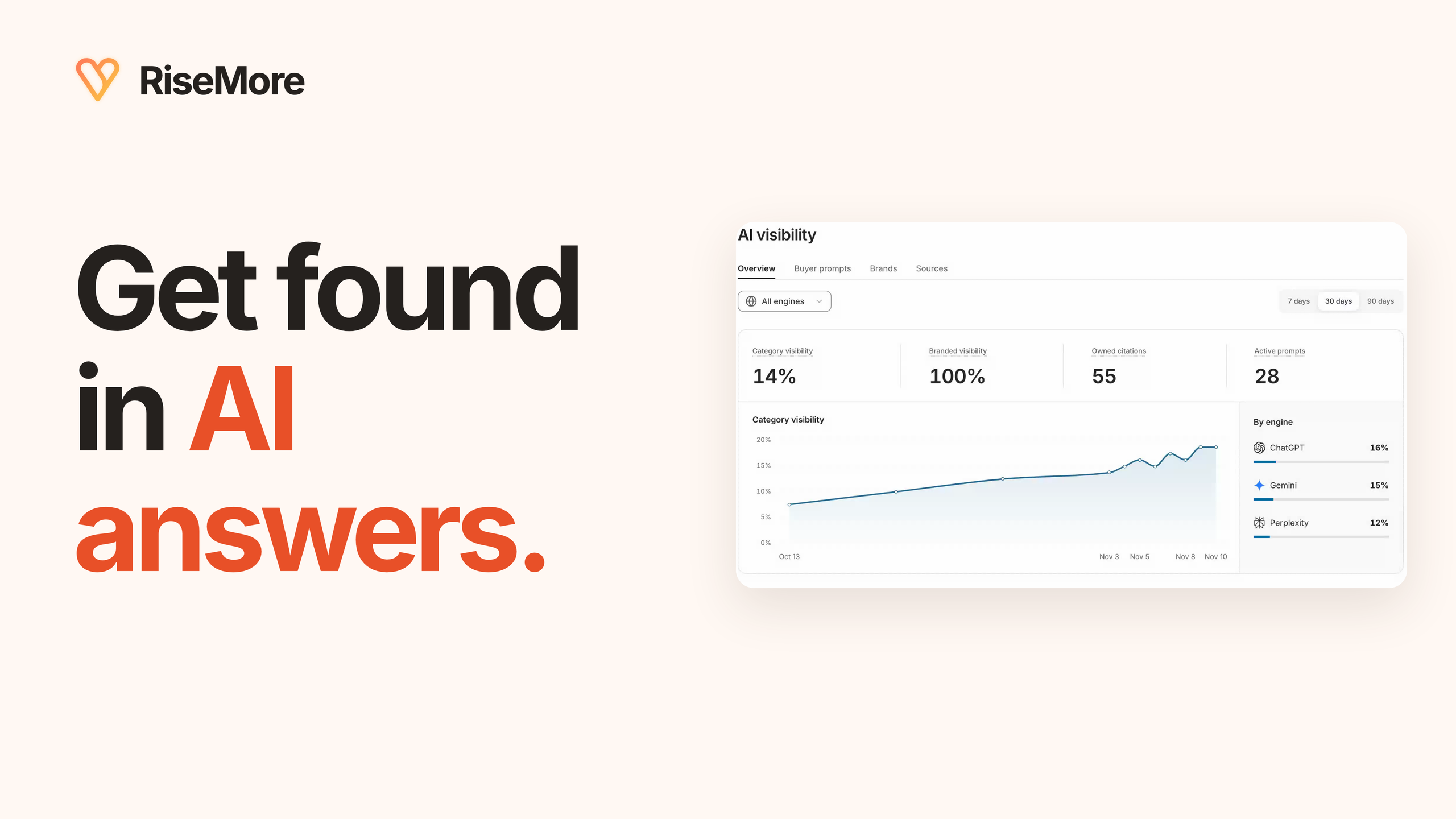
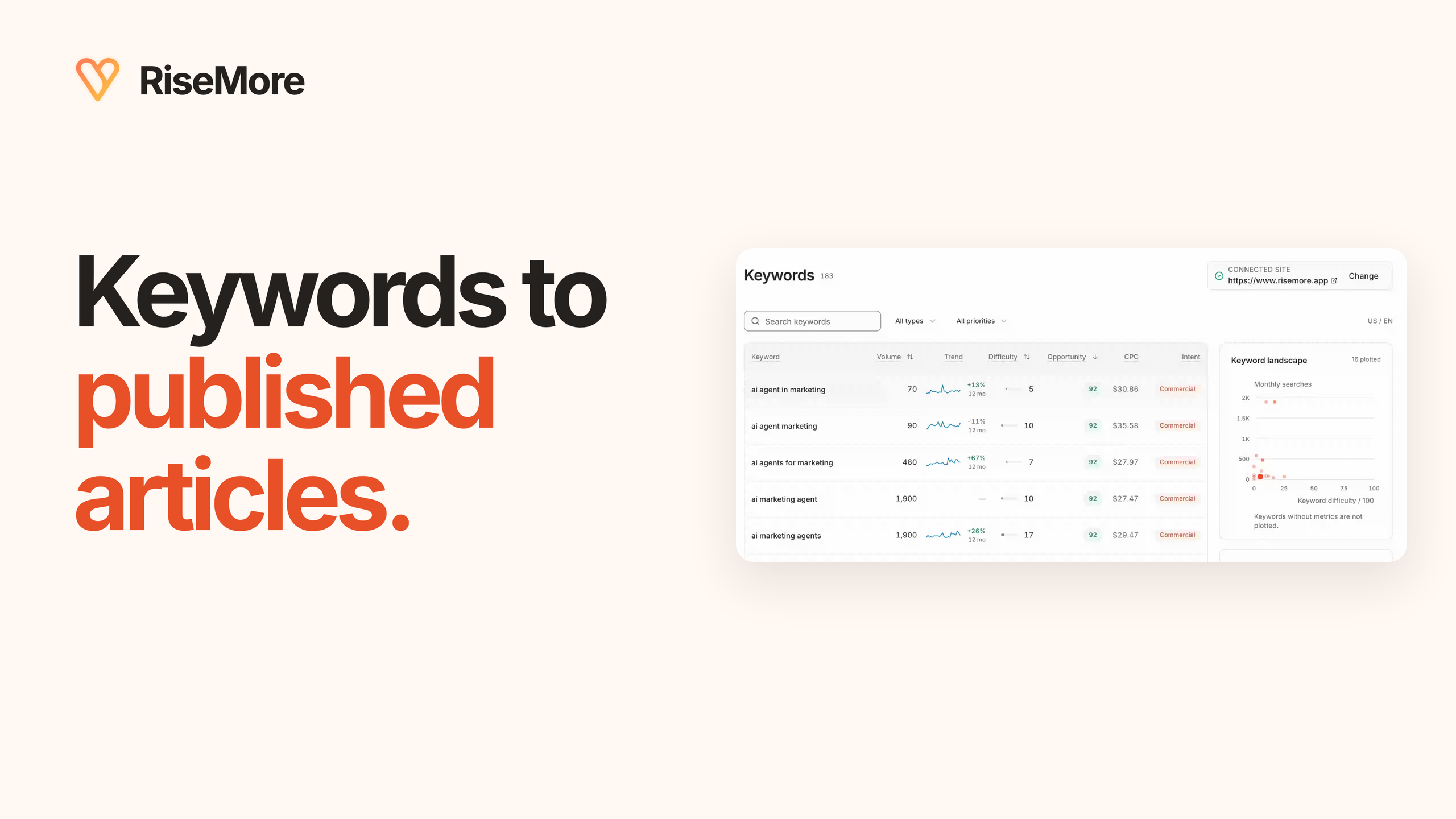
RiseMore's GEO Agent researches buyer prompts across ChatGPT, Gemini and Perplexity and records mentions and citations through recurring checks. You can select a research brief to generate an editable article and cover; the publication destination is selected and checked when you approve delivery, not assigned during writing. GEO article publication on your behalf carries a separate fee. Reddit is a separate workflow for community posts or top-level thread comments, with its own content and target approval; it is not a GEO article destination.
From mentioned to recommended
A mention means the product was named. A recommendation is a different judgment in the answer. Consistent, accurate descriptions can make your product easier for readers to understand, but you do not control whether an assistant recommends it.
If public profiles describe incompatible capabilities, correct them where you have control and request corrections elsewhere. Describe the real category, buyer fit, price and limitations consistently. Do not invent a positioning claim merely because it appears in a competitor's answer.
How to appear in AI Overviews
Google's guidance for AI features says standard SEO fundamentals still apply. For a page to be eligible as a supporting link, it must be indexed and eligible to appear in Google Search with a snippet. There is no additional special schema or AI text file required, and eligibility does not guarantee indexing or inclusion.
Check crawl access, useful text, internal links and structured data that matches the visible page. Google says AI features may search across related subtopics, so a specific explanation or comparison can be relevant without being a generic category overview. AI Overviews do not appear for every query.
Answer the real question clearly and keep the facts current. Google's current guidance points site owners to Search Console's Generative AI performance report. It reports impressions of links to your site in AI Overviews and AI Mode, with page, country, date and device breakdowns. An impression means a link was shown, not that someone visited or that every brand mention was captured. The report may not appear when a site has too few impressions. Measure visits and conversions separately, and do not treat a reporting change as proof that a particular edit caused it.
A two-week sequence
- Write six buyer prompts, run them on all four surfaces, and record the date, the products named and the URLs cited.
- Pick two prompts your product genuinely fits, then inspect any missing or inaccurate information and the destinations where a useful contribution is permitted.
- Write the answer each source is missing, as a disclosed thread reply, a fact sheet to an editor, or a comparison page of your own.
- Fix one page on your site that answers a sub-question the overview would need, with the answer in the first two sentences.
- Re-run the same six prompts after two weeks as an initial checkpoint. A new citation is an observed change, not proof of causation or a guaranteed lasting result; continue comparable checks.
What a mention is worth
A citation is not a visit, and a visibility score is not a business result. ChatGPT can name your product in the same paragraph where it names three competitors and tells the reader to compare pricing, and the person reading may click none of the links.
Keep the metric precise: among the valid answers captured for a defined set of prompts, engines and dates, what proportion mentioned your product? Repeated runs create additional observations; this is not simply the percentage of distinct prompts. RiseMore's GEO reporting uses valid observations, not traffic or conversions. Inspect the underlying answers and sampling changes before interpreting a trend.
Whether a mention leads to a visit, trial or purchase is a separate measurement. Use your own analytics and customer feedback where attribution is available, and keep those outcomes separate from mention and citation counts.