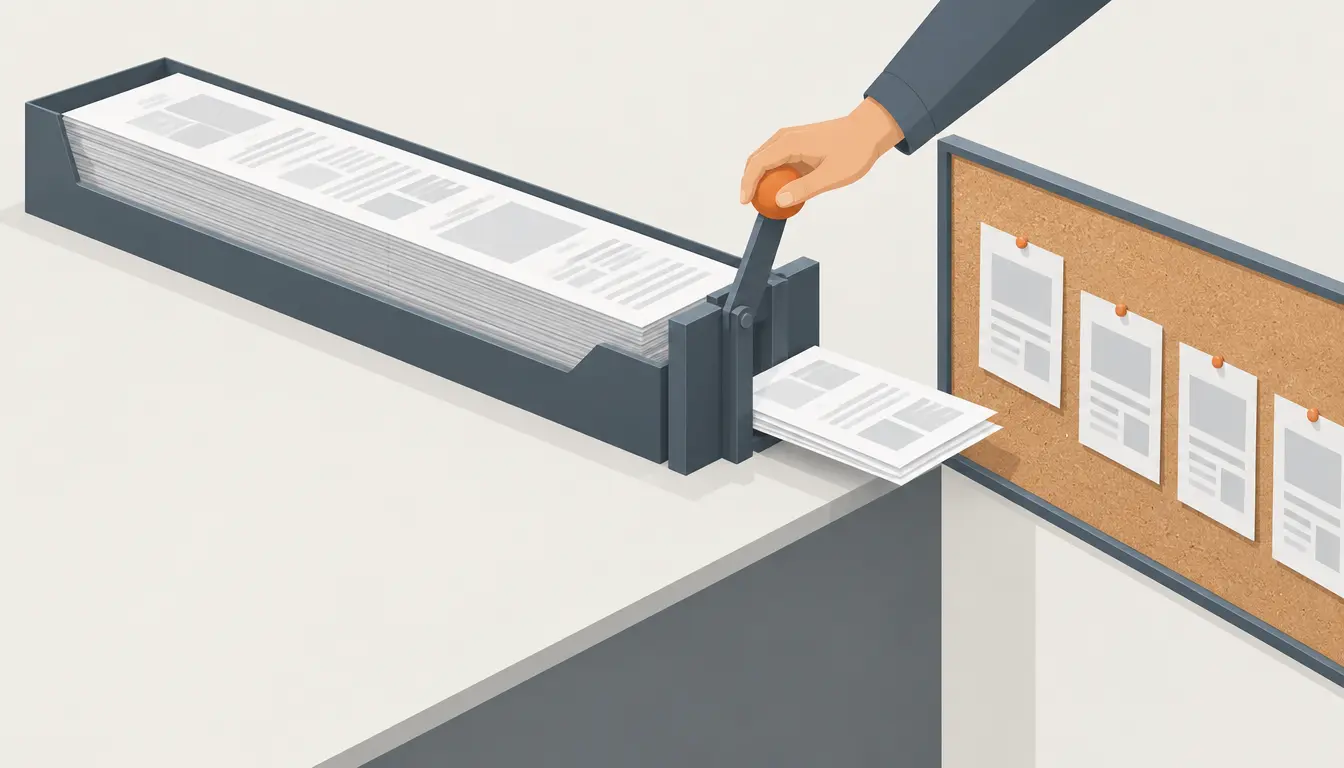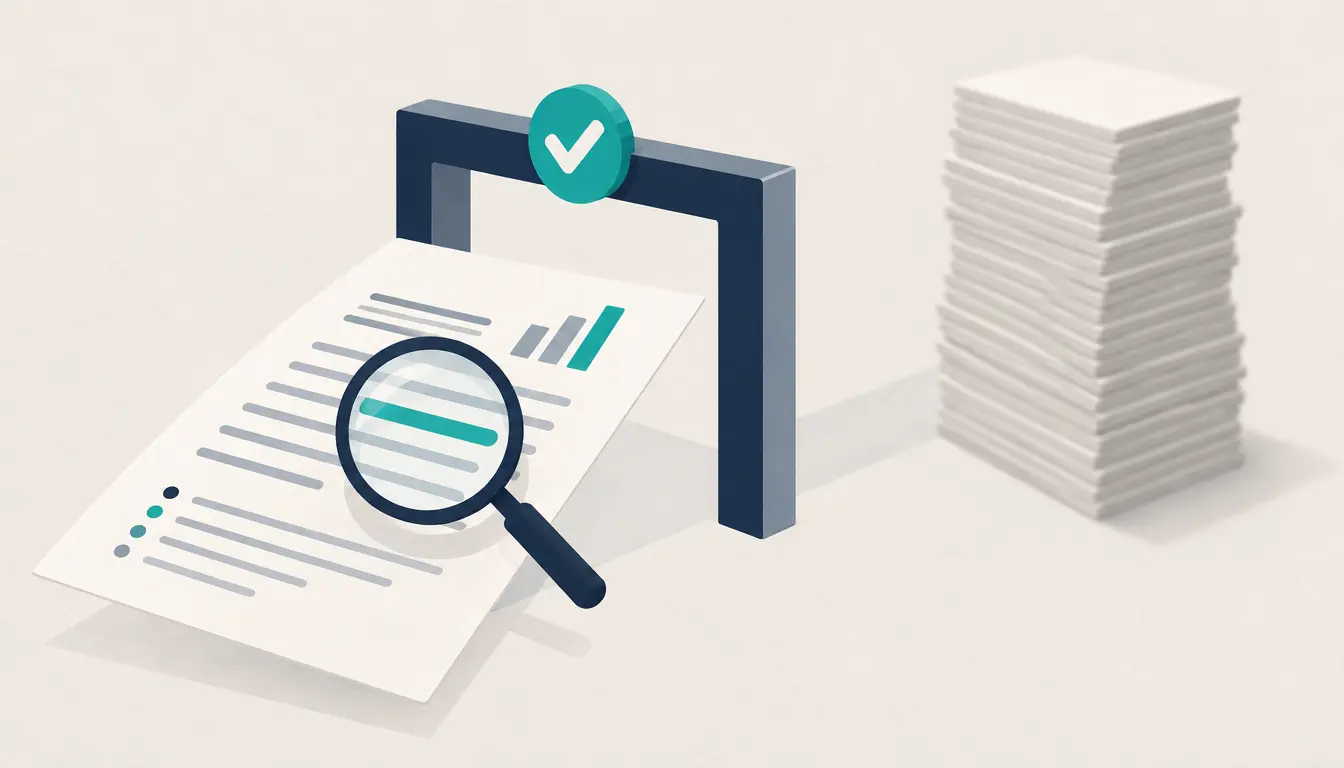
Learning how to market an app can leave a solo developer with more channels to manage than time to use them. One practical starting point is to identify a buyer problem, find a suitable place to answer it, and measure what happens after people discover the app. Low downloads alone do not tell you whether the problem is the audience, the message, the product or the signup experience.
With no marketing team, the version that fits in your week is narrower: one question your app actually answers, one complete answer placed where that question is already being asked, and a date on which you decide whether the answer worked. The channel follows from the question. The date is what stops a quiet move to a new platform in week five.
Separate a founder's experience from the diagnosis
In a , a supplement-app developer reported trying several maker communities and Reddit without gaining many downloads. Other participants shared their own experiences and suggestions. Those are separate accounts, not a controlled test of why this app struggled.
The useful question is what happened at each step: did relevant people see the contribution, understand the app, visit its page and complete its first useful action? Karma and upvotes do not answer those questions. A channel choice should be a hypothesis you can inspect, not a verdict drawn from someone else's launch.
Choose the buyer's question before the channel
Write down what problem the app solves and who has that problem. Use actual user questions, search queries and conversations to check the wording, then look for a place where those people already seek help.
A question worth building a month around passes three tests.
- A buyer would type it in their own words. "Invoice reconciliation" is your category name. "Why do two of my bank feeds show the same transaction" is what someone types at 11pm.
- Your app can help with the problem under the buyer's real constraints. Explain setup, migration, price and limitations honestly; a longer setup does not make a product irrelevant, but it changes the promise you can make.
- Somewhere the question is already being asked, and an answer from you is allowed to exist there.
If you cannot connect a proposed question to a real buyer need, do more customer research before scaling publication. That is a reason to investigate the message, not proof that every channel will fail.
Writing the question down gives the next session a starting point. Set aside a bounded research block to check where it is being asked and whether the previous answer is still useful.
A full answer, in a place that permits one
A full answer survives the deletion of your product's paragraph. It says what causes the problem, what to check first, what the usual fixes cost in time or money, and which fixes don't work. Then one or two sentences on what you built, if the destination allows that at all.
Do not disguise a product pitch as an independent recommendation. Whether you draft yourself or use AI, describe the actual relationship to the product and check the destination's rules before contributing.
Permission can rule out a particular channel. Some communities prohibit promotion or particular product categories; others allow a relevant contribution under specific conditions. Read the live rules rather than extrapolating from another founder's experience.
Possible destinations include an article on your own site and a community that permits the contribution. Search engines or AI answers may later surface that material, but neither indexing nor citation is guaranteed. If a community prohibits the content, skip that destination rather than trying to conceal the promotion. The explains review and delivery for eligible contributions.
Set the checkpoint before the first post
A checkpoint helps distinguish a lack of evidence from a change of priorities. Choose one before the first post so you know what you intend to learn and when you will review it.
Before the first post, choose a review interval that fits the channel and your workload—for example, six weeks for an initial review, with a longer horizon for SEO—and the signals you will inspect: a reply that asks a follow-up, a click through to the app, a signup that names where the person found you. On the date, pick one of three moves: keep the question and the place, keep the question and change the place, or change the question.
At the checkpoint, inspect both execution and outcome. Few results after consistent work call for a different investigation from a plan that never reached the intended audience. Also check whether visitors could understand and use the app; a channel is only one part of the path.
The hours it actually takes
A sample weekly budget is an hour for research, two hours for one substantial answer and a separate review before publication. These are planning estimates, not measured completion times; adjust them to the content and destination. Keep source links and unfinished work so the next session does not start from nothing.
RiseMore helps carry this work through research, drafts and approved publication using shared product context. SEO articles go to a connected WordPress site; Social posts go to your connected X or LinkedIn account. GEO articles and Reddit contributions can be published on your behalf to a destination you confirm, with separate delivery fees. Research about buyer prompts or competitor moves is evidence to inspect, not proof of traffic or purchases. Publication does not guarantee indexing, ranking or recommendation.
What this route does not cover
It does not cover the app store. Listing copy, screenshots, ratings and the store's keyword field are a separate discipline, and if your installs depend on store search, nothing here substitutes for that work. For a web app the equivalent gap is paid search and marketplace listings. Paid acquisition is out of scope here. Assess its costs against your audience, conversion rate and retention instead of treating a provider's CPC estimate for one keyword as the cost of an entire acquisition strategy.
Attribution has a ceiling too. You can count signups and clicks. You cannot prove the thread caused them, and a founder who reports that it worked is usually reporting a correlation they watched closely.
If the first review shows no replies, clicks or signups, investigate reach, fit, the message and the app experience before deciding what to change. The checkpoint is a way to make that decision from evidence, not a fixed deadline for success.